

Advanced Balance and Dizziness Diagnostic Test
What is Videonystagmography (VNG)?
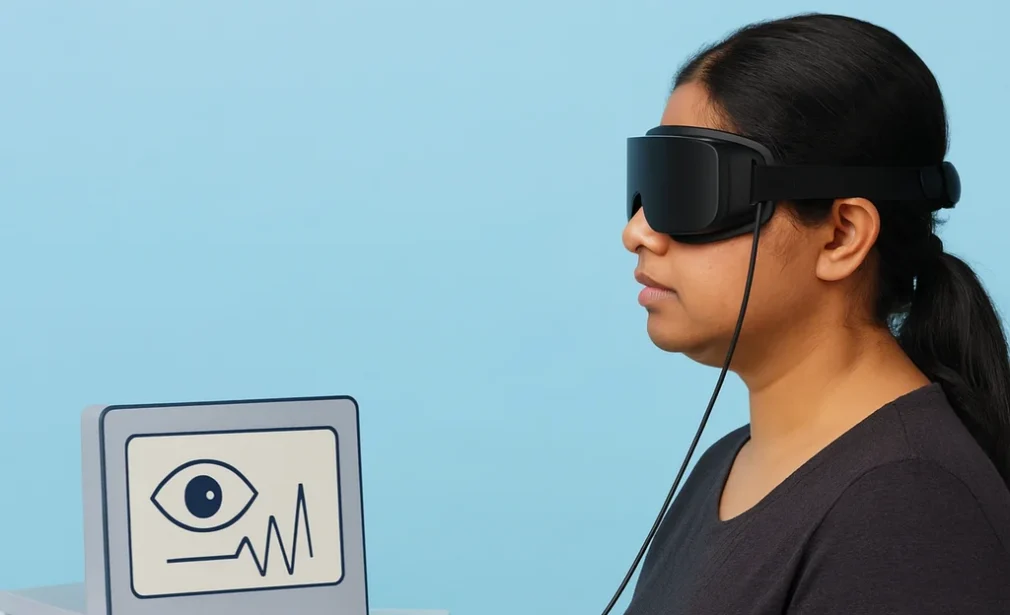
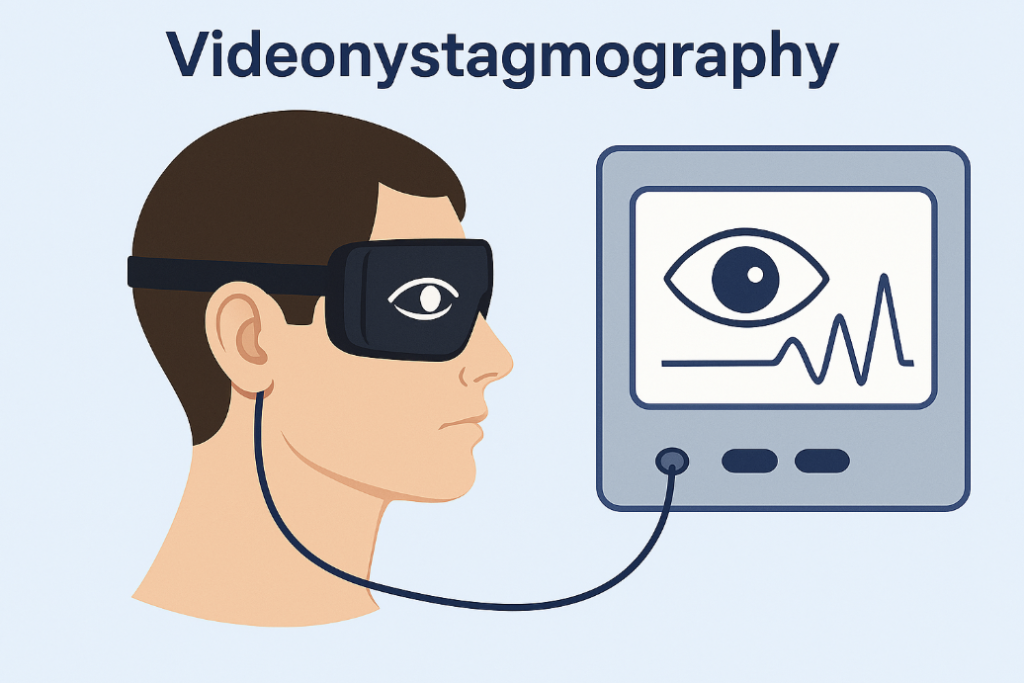
Videonystagmography (VNG) is a state-of-the-art diagnostic test used to evaluate inner ear (vestibular system) and central motor functions. It specifically assesses involuntary eye movements, known as nystagmus, which are closely linked to balance and spatial orientation.
This test plays a critical role in identifying the root causes of vertigo, dizziness, balance disorders, and unsteadiness, allowing for targeted and effective treatment.
Purpose of the Test
- To assess vestibular (inner ear) function
- To evaluate the connection between the eyes and balance system
- To differentiate between central and peripheral causes of dizziness
- To help diagnose Ménière’s disease, vestibular neuritis, labyrinthitis, and BPPV
Note: VNG is considered more comprehensive and accurate than older ENG (Electronystagmography) tests, as it uses video tracking for eye movement analysis.
Clinical Procedure
- A soft plastic probe is gently placed in the ear canal to create an airtight sea.
-
A probe tone (typically 226 Hz) is introduced while air pressure in the canal is varied from +200 daPa to -400 daPa.
- Ocular Motor Testing – Eye tracking of moving objects
- Positional Testing – Monitoring eye movement in different head positions
- Caloric Testing – Gentle warm and cool air/water introduced into the ears to stimulate the inner ear
- Eye responses are recorded and analyzed in real-time through a connected computer system.
Patient Preparation
Avoid caffeine, alcohol, and sedatives 24 hours before the test.
Do not wear eye makeup or facial creams on the day of the test.
Have someone accompany you if dizziness persists post-test.
Do not wear eye makeup or facial creams on the day of the test.
Test Duration
- Average Time: 60 to 90 minutes
- Report Delivery: Interpretation and discussion of results are provided after analysis by our audiology experts.
Why Choose Denoc Hearing for VNG Testing?
- Highly trained vestibular audiologists
- Infrared camera-based video goggles for precise diagnostics
- Comprehensive vestibular assessment in one session
- Focused treatment planning based on accurate results
Frequently asked questions
Yes, it’s a safe and non-invasive procedure. Some patients may experience mild dizziness during the test, but it is temporary.
VNG helps identify causes of vertigo, dizziness, balance issues, and disorders like BPPV, vestibular neuritis, and even neurological problems affecting balance.
Some medications may interfere with test results. Please consult with our audiologist or your physician beforehand.